I worked on this project as part of Purdue’s AAE 41800 Zero-Gravity Flight Experiment course, which partners students with Blue Origin to design real flight payloads for the New Shepard rocket. My teammate and I picked up an ongoing project from a previous semester’s team: using the brief microgravity window of a suborbital flight to study how popcorn pops differently in near-lunar gravity. The payload also had to double as a teaching tool, since the mission was designed so K-12 students could eventually build and run a version of the same experiment themselves.
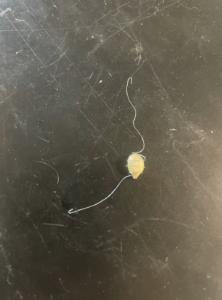
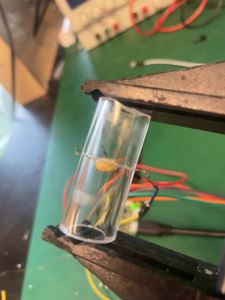
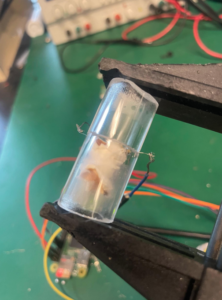
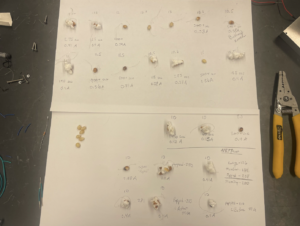
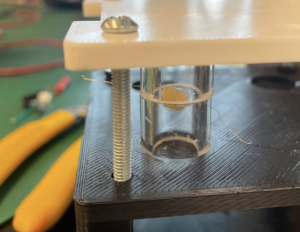
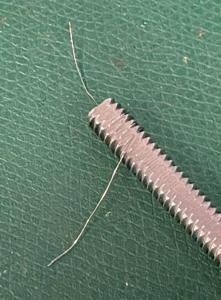
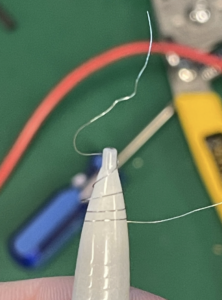
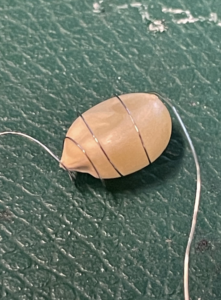
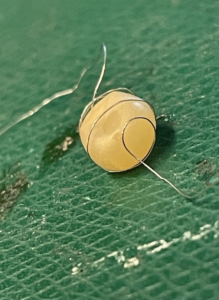
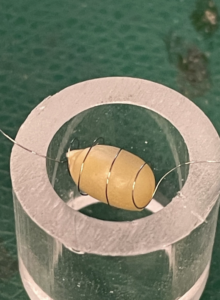
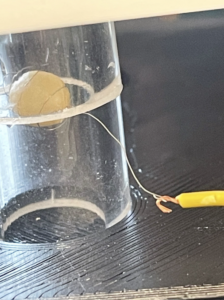
I built a self-contained payload that heats a popcorn kernel with nichrome wire inside a sealed LaunchBox, timed to reach popping temperature right as the rocket hits its microgravity coast phase. I worked on both the hardware and the software: wrapping and testing nichrome wire lengths to find a current that would reliably pop the kernel without burning it, wiring a solid-state relay so a Raspberry Pi Zero could trigger heating at the right altitude, and writing the Python script that reads incoming flight telemetry and commands the payload in real time. I also redesigned the 3D-printed mounting hardware to clamp the kernel securely for flight and co-authored the final technical report documenting the design and test results for Blue Origin’s review.
The payload passed all vibration and drop acceptance tests and was approved for launch on Blue Origin’s New Shepard. Along the way, I solved some genuinely tricky problems, like figuring out why too little current caused kernels to burn instead of pop (I traced it to a race between gas escaping and pressure building inside the kernel), and getting reliable electrical connections that could survive the vibration of a rocket launch.