This project started with a question I asked my professor after an aerodynamics lecture on the Magnus effect, which is the phenomenon where a spinning object generates lift because of the pressure difference it creates around itself. I asked him: what if the skin of a wing moved like a treadmill? Would it generate more lift the same way a spinning object does? His answer was essentially that it was a strange idea, but worth trying. So I did.
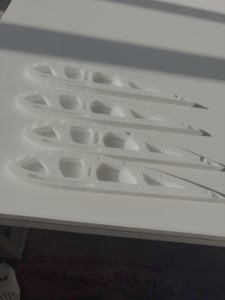
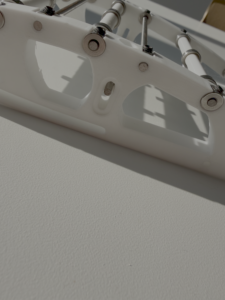
I designed a wing where the outer surface itself could move, essentially a rotating skin layered over a conventional airfoil shape. The idea was that a moving surface would amplify the pressure differential across the wing and generate more lift than a fixed surface of the same shape. I modeled the airfoil geometry in Autodesk Fusion, 3D-printed the internal rib structure, and built out a functional prototype with the rotating mechanism integrated into the frame. Wind tunnel testing is the next step and hasn’t happened yet, so I don’t have lift data to share, just a prototype that proves the mechanism itself works.
Even without test data, working through this idea made me realize that modern aircraft don’t actually need more lift, they need less drag. More lift usually comes with more weight, more mechanical complexity, and more cost, without improving fuel efficiency. Lift-to-drag ratio is what actually matters for most commercial applications, not raw lift on its own. That said, I don’t think the idea is dead. There are situations where maximum lift matters more than efficiency, like aircraft operating from very short runways, such as carrier-based planes, or other specialized use cases where you’re willing to trade efficiency for lift. I think of this less as a finished project and more as an idea still looking for the right application.